
How to successfully install your temporary POS displays
Key takeaways
• A successful temporary POS display campaign relies on four key decisions: the display type, the material, the location and the message.
• FSC-certified cardboard remains the material of choice for short-term campaigns: recyclable, lightweight and suitable for high-definition printing.
• Location often matters more than format: a well-positioned display stand will outperform a poorly placed standard solution.
• POP Solutions designs, manufactures and delivers your temporary POS display solutions through its five design offices in Belgium and the Netherlands.
Whether you’re running a promotional campaign, launching a new product or supporting a seasonal event, temporary POS displays bring your in-store campaigns to life. Designed to last for the duration of a campaign, they must capture shoppers’ attention within seconds and encourage purchases. Their successful implementation depends on seven key decisions, from choosing the right display solution to measuring campaign performance.
What are temporary POS displays?
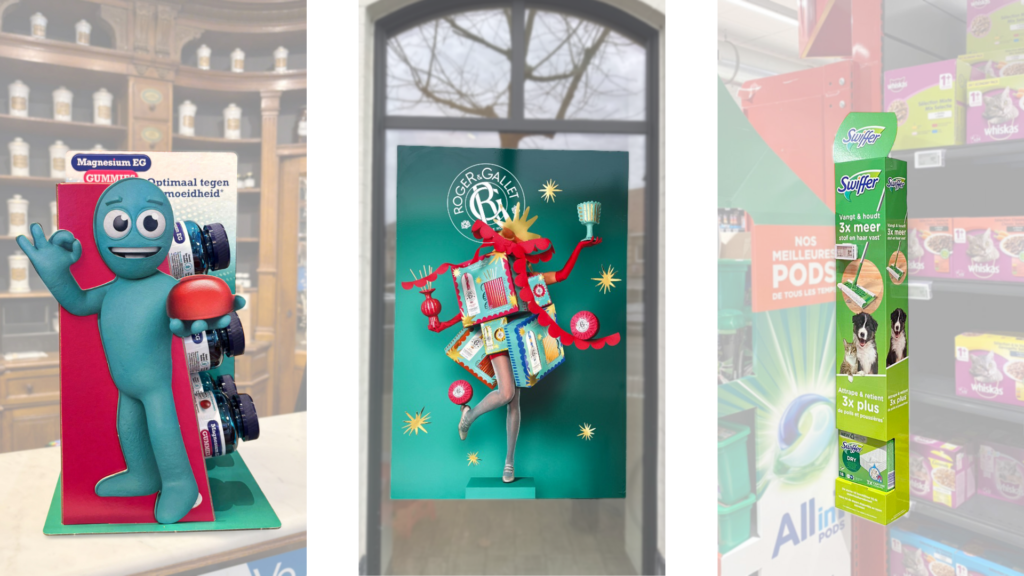
Temporary POS displays are point-of-sale advertising solutions designed for short-term use, typically lasting from a few weeks to a few months. They support promotions, product launches, seasonal events and special campaigns. Their purpose is simple: capture shoppers’ attention and drive sales throughout the campaign period.
Temporary point-of-sale advertising
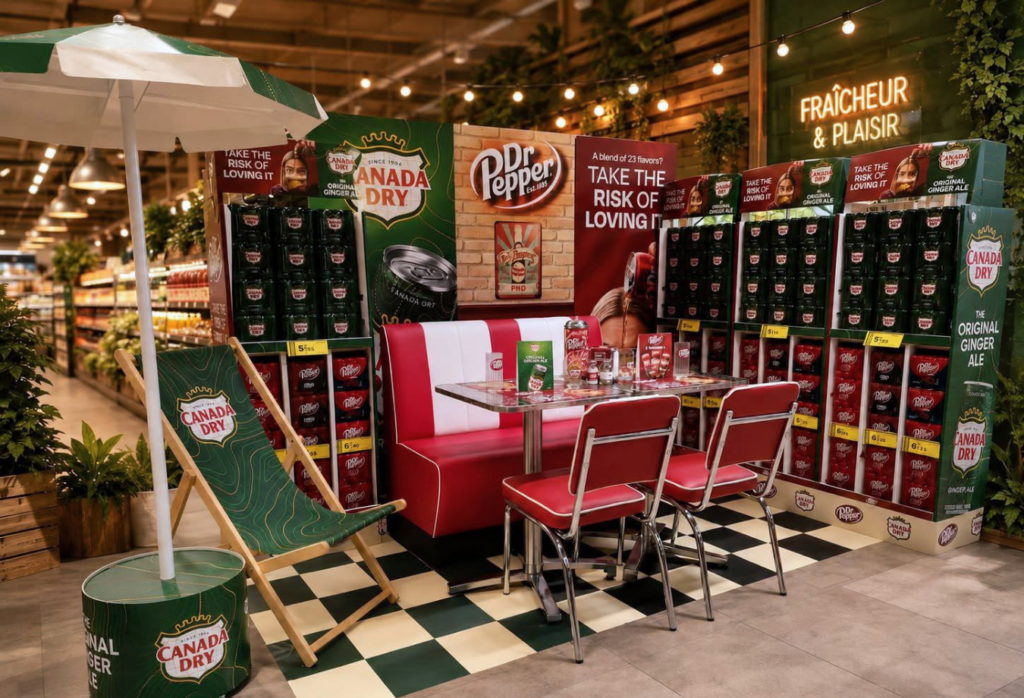
POS stands for Point of Sale. In its temporary form, POS displays come in several formats, each serving a specific campaign objective.
- Event POS displays support product launches and brand anniversaries.
- Promotional display units create dedicated promotional corners in-store.
- Promotional POS displays reinforce special offers, sales events and seasonal campaigns.
Temporary POS displays, permanent POS displays and in-store information (ISI): what’s the difference?
Three categories coexist in-store. Temporary POS displays showcase products during short-term campaigns. Permanent POS displays, designed for greater durability, establish a lasting brand presence. In-store information (ISI) provides guidance and information to shoppers. The right solution depends on your budget and communication objectives.
- Temporary POS displays are typically used for periods ranging from a few weeks to several months. Generally manufactured from FSC-certified cardboard or other lightweight printable materials, they support promotions, product launches and seasonal campaigns.
- Permanent POS displays are designed to remain in place for several months or even years. Manufactured from metal, wood or reinforced cardboard, they strengthen long-term brand presence, enhance a premium image and encourage customer loyalty.
- ISI solutions are permanently installed within the retail environment. Often produced in FSC-certified cardboard or vinyl, they provide shoppers with information, guide them through the store and structure the purchasing journey.
To learn more, read our article on the different types of POS displays.
Creating successful temporary POS displays is never improvised. These seven recommendations provide a structured approach, from selecting the right display solution to measuring campaign performance.
Tip 1: choose the right display solutions for your campaign
The choice of display solution depends on your campaign format, the target retail area and the message you want to communicate. POP Solutions distinguishes between two decision levels: the display type and the material.
Display types
- Floor display
- Counter display
- Pallet box
- Advertising banner
- Beach flag
- Shelf dressing (totem, shelf talker, wobbler)
- Pallet dressing
- Retail furniture dressing
Materials
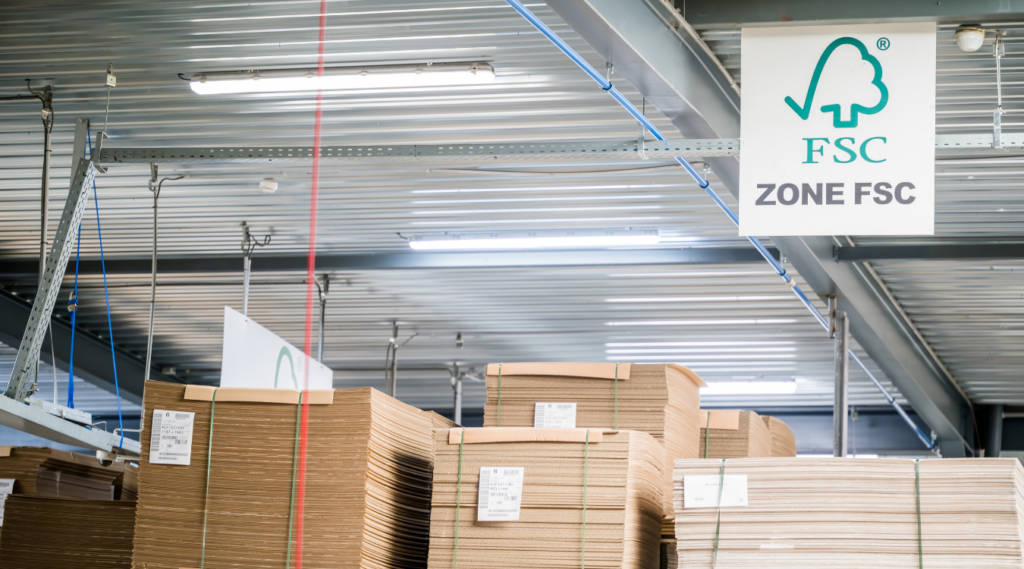
FSC-certified cardboard remains the benchmark material for temporary campaigns. Recyclable, lightweight and suitable for high-definition printing, it combines visual impact with practicality. Modular and demountable structures are particularly well suited to recurring campaigns, as they can be reused and reconfigured from one activation to the next.
Discover our cardboard displays and retail furniture.
Tip 2: choose your display stands according to their location
Displays are the cornerstone of every temporary POS display campaign. Four main formats should guide your choice:
- Floor displays are positioned on end caps, in main aisles or at the entrance to a retail section to create high-impact product presentations.
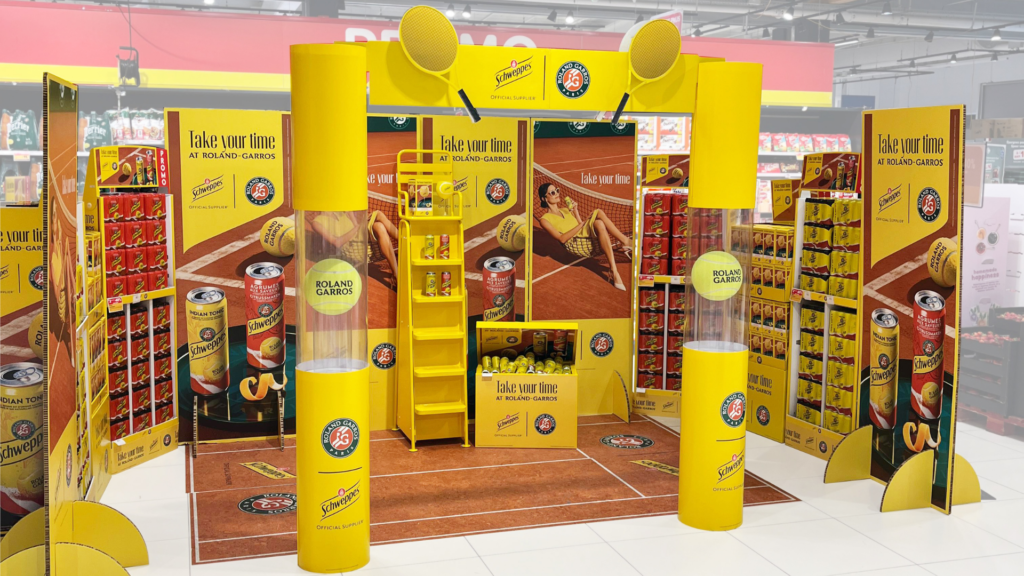
- Theatrical displays are installed in main aisles to create maximum visual impact, immediately capture shoppers’ attention and enhance a brand or campaign.
- Counter displays are placed in checkout areas to encourage impulse purchases and highlight smaller products.
- Pallet boxes are positioned in main aisles during large-scale promotional campaigns to maximise visibility while simplifying logistics.
Every location requires the right format. A floor display placed in a secondary aisle will often be less effective than a well-positioned shelf talker.
Tip 3: position your POS displays in the right in-store location
The right location is just as important as the display itself. Four areas attract the highest shopper attention:
- Store entrance, to announce the campaign.
- End caps, for promotions and product launches.
- Product shelving, to interrupt the customer journey.
- Checkout area, to encourage impulse purchases.
Successful in-store retail activations rely on placing POS displays in the highest-traffic locations. When supported by in-store staff, the display becomes the anchor point of the activation.
Tip 4: align your temporary POS displays with your merchandising strategy
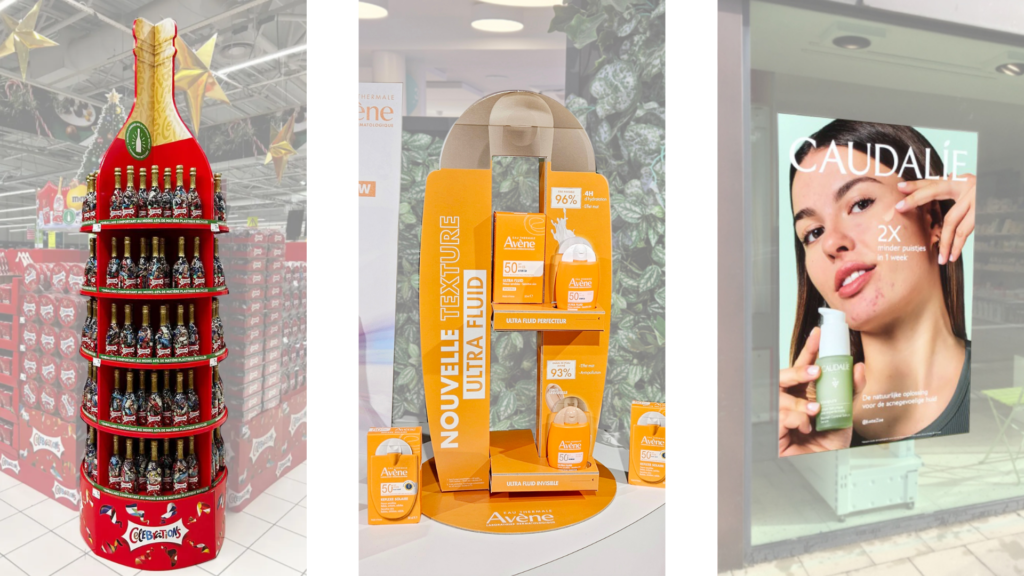
An effective POS display extends your merchandising strategy. From the design stage onwards, ensure your POS campaign integrates seamlessly with the store’s merchandising plan. Featured products should already be available on the shelf, your brand identity (logo, colours and slogan) must remain consistent, and the display should complement the retailer’s signage.
A POS display promoting a product that is unavailable on the shelf creates inconsistency and disrupts the shopping journey. Conversely, a display that reflects the shelf’s colour codes and naturally extends the product facing reinforces the message and helps shoppers identify products more quickly.
Tip 5: refine your promotional message
A promotional POS display must communicate its message in just three seconds. Structure the content clearly: the offer at the top; the product at the centre; the brand as the signature. Limit your communication to one main message, one impactful product visual and one clear call to action. The clearer the promise, the more effectively it captures shoppers’ attention.
Tip 6: think about the entire retail experience
Successful implementation begins long before delivery and continues afterwards. From the outset, the project brief should define the display format, location, material, timeline and logistics. POP Solutions designs, manufactures and delivers your POS displays from its two production facilities in Nivelles and Antwerp. This one-stop shop approach ensures your retail campaign stays on schedule.
Tip 7: measure the performance of your temporary POS displays
The effectiveness of temporary POS displays should be evaluated before, during and after the campaign:
- Sell-out performance of the featured product compared with the previous period.
- Shopper stop rate on the shelf (observed on-site or measured using analytical cameras).
- Physical condition of the display at the end of the campaign.
Comparing these indicators across campaigns helps refine future project briefs.
Frequently asked questions
How long do temporary POS displays last?
Temporary POS displays remain in place for the duration of a commercial campaign, typically from a few weeks to several months. Event POS displays are aligned with the event itself, promotional POS displays with the promotional period, and promotional display units with the in-store promotional campaign.
What is the difference between temporary and permanent POS displays?
Temporary POS displays, generally manufactured from FSC-certified cardboard, support short-term campaigns. Permanent POS displays, made from metal, wood, plastic or reinforced cardboard, remain in place for several months or years. The choice depends primarily on campaign duration and budget.
Are temporary POS displays environmentally friendly?
FSC-certified cardboard is recyclable and sourced from responsibly managed forests. End-of-campaign recovery is considered from the design stage. Environmental performance ultimately depends on the material selected, the product’s lifespan and the end-of-life recycling process.
Make your temporary POS displays a success with POP Solutions
Successful implementation combines the right display solution, the right location, the right message and effective performance measurement. POP Solutions supports you as your single partner for the design, manufacture and delivery of bespoke POS displays through its five design offices (Amersfoort, Antwerp, Mechelen, Nivelles and Liège). EcoVadis Gold certified (placing us among the top 5% of certified companies in our sector), we design FSC-certified cardboard POS displays for high-impact short-term campaigns.