
POS displays for product launches: 7 tips for a successful campaign
Key takeaways
• POS displays reinforce your product launch campaign in store, but they do not replace it.
• The more a product lends itself to impulse buying, the greater the influence POS displays can have on purchasing decisions.
• The display should be developed alongside the product, and its placement matters just as much as its design.
• POP Solutions designs, manufactures and delivers your displays, from the initial mock-up to the retail shelf.
A marketing campaign builds awareness of a product even before it launches. Once in store, customers may or may not recognise what they have seen elsewhere. POS (point-of-sale advertising) plays a vital role in bridging that gap: it gives the new product a prominent position on the shelf and turns curiosity into a first purchase.
Here are seven tips for creating effective POS displays for product launches, from the initial brief through to delivery.
What role do POS displays play in a product launch?
POS displays for product launches extend the campaign to the point where customers make their purchasing decisions. They do not create product awareness: advertising and public relations do that beforehand. Instead, they make the new product easy to identify on the shelf, communicate its key benefit in just a few words and encourage the first purchase.
Several factors contribute to a successful launch over a period of months: advertising, press coverage, securing listings with retailers and pricing strategy. The point of sale is the final stage, where customers make their choice. Without a dedicated display, the new product blends into the shelf, and all the effort invested beforehand loses its impact at the store entrance.
Are POS displays equally important for every product?
The role of POS displays depends on how customers buy the product. The more they make their decision in front of the shelf, the greater the impact of the display. With chocolate, sweets, drinks and cosmetics, purchases are often impulsive, so POS displays can directly influence sales. When customers compare products before buying, displays instead help confirm a decision they have already made. This helps determine how much to invest in a display and where to position it.
1. Plan your POS displays from the outset of the launch
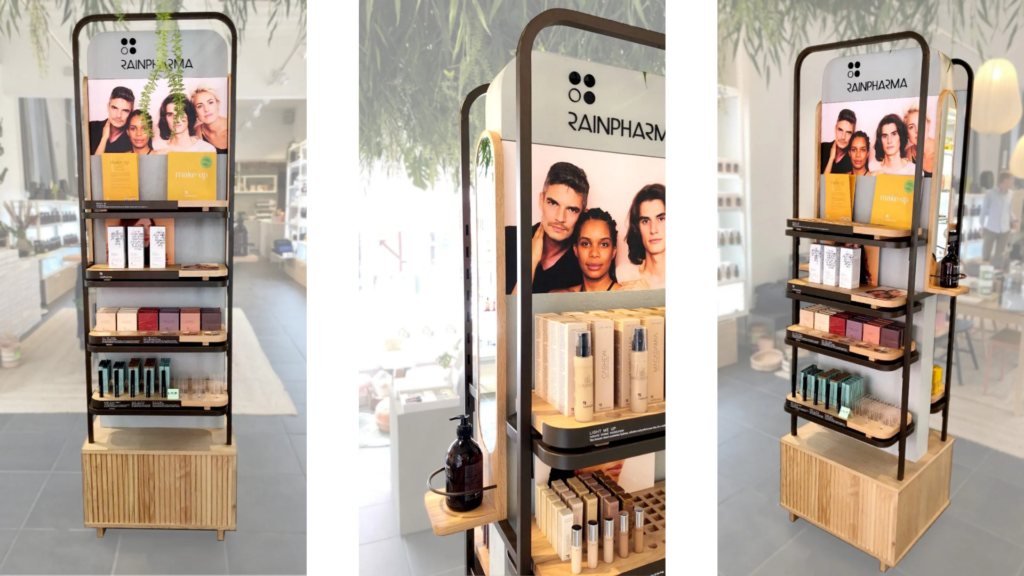
For a product launch, planning the display should ideally begin in the earliest stages of preparation. Briefing, mock-up, prototype, approval, manufacturing and delivery: each stage takes time. Allow at least four weeks for a cardboard display. Permanent retail furniture requires more time, depending on the material selected and the production site.
Align this backward schedule with your campaign timeline: the display needs to be in store from the very first day of advertising. If POS displays are commissioned too late, they may arrive after the initial excitement surrounding the new product has faded.
2. Create POS displays that reinforce the new product campaign
The same colours, the same promise: customers should recognise the brand before they even read the label. The display should reinforce the campaign message without introducing a new one. Often, a single, well-chosen message is enough to explain what makes the product new.
Nobody reads a display that tries to explain everything. Keeping it simple is the first principle of effective POS displays.
3. Position your POS displays where they attract attention
At the point of sale, each area serves a different purpose:
- The entrance introduces the new product.
- The main aisle catches the attention of passing shoppers.
- The end cap maximises visibility.
- The shelf reassures customers as they make their choice.
- The checkout encourages impulse purchases.
Adapt the height of the display and the size of the text to the distance from which customers will read it. Where floor space is limited, shelf dressing highlights the new product directly within the existing shelving.
4. Choose the display format that encourages purchases
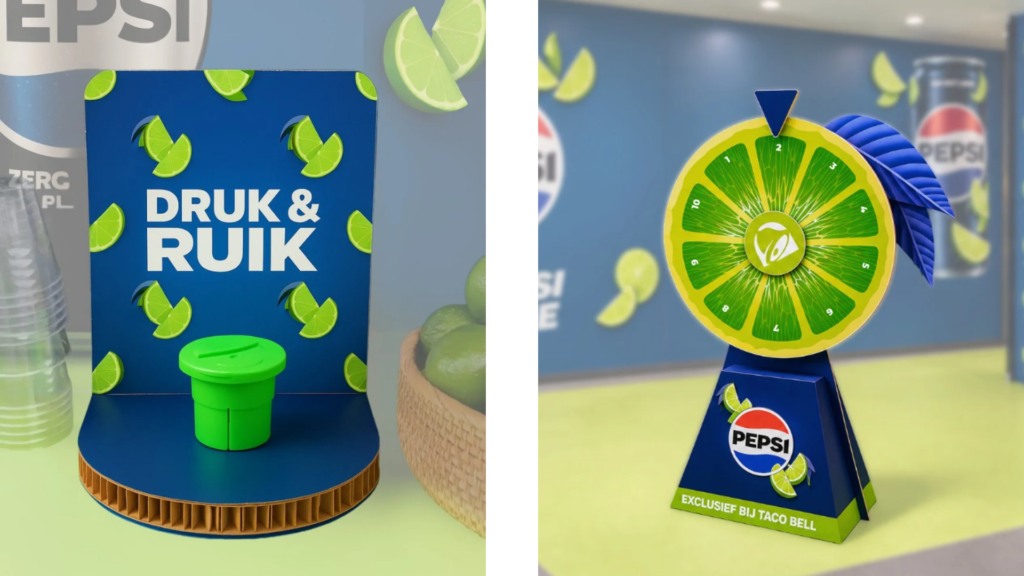
Each format serves a specific commercial objective:
- A floor display introduces the new product in the aisle and accommodates large quantities.
- A gondola brings the product range together and gives the launch its own dedicated display space.
- A counter display encourages impulse purchases by placing products within easy reach of the checkout.
- A dump bin invites customers to pick up the product and try a sample size.
- Shelf dressing extends the brand’s visual identity across the existing shelving.
- A ready-to-install POS display kit ensures consistent installation across an entire network of stores.
Our cardboard displays and retail furniture are available in most of these formats. See them in action in our projects.
5. Customise your display down to its shape
High-definition digital printing reproduces brand colours accurately, while bespoke cutting allows the display to follow the shape of the product. A customised display helps your launch stand out from other new products appearing in the same aisle during the same month.
6. Align your POS displays with the launch promotion
An introductory offer, sample or trial size can encourage the first purchase, provided the promotion is legible from a distance. Make sure the message is consistent across the display, the shelf price and the campaign communications. Three different messages will only leave customers confused.
7. Plan ahead for logistical requirements
A successful product launch means anticipating the logistical requirements of each retailer. Every retail chain has its own rules, including delivery deadlines for distribution centres, available floor space in store and maximum POS display height.
The same display may be accepted by one retailer and rejected by another if it fails to meet these requirements. Taking these constraints into account from the initial brief, before the display is even designed, ensures that the campaign can be rolled out everywhere at the same time, meeting the needs of both customers and retailers.
Why choose POP Solutions for your product launch POS displays?
POP Solutions brings design, production and logistics together under one roof, with a single point of contact overseeing your project from start to finish. Thanks to our five design offices in Amersfoort, Antwerp, Mechelen, Nivelles and Liège, and two production sites in Nivelles and Antwerp, we can meet the tight deadlines of a product launch.
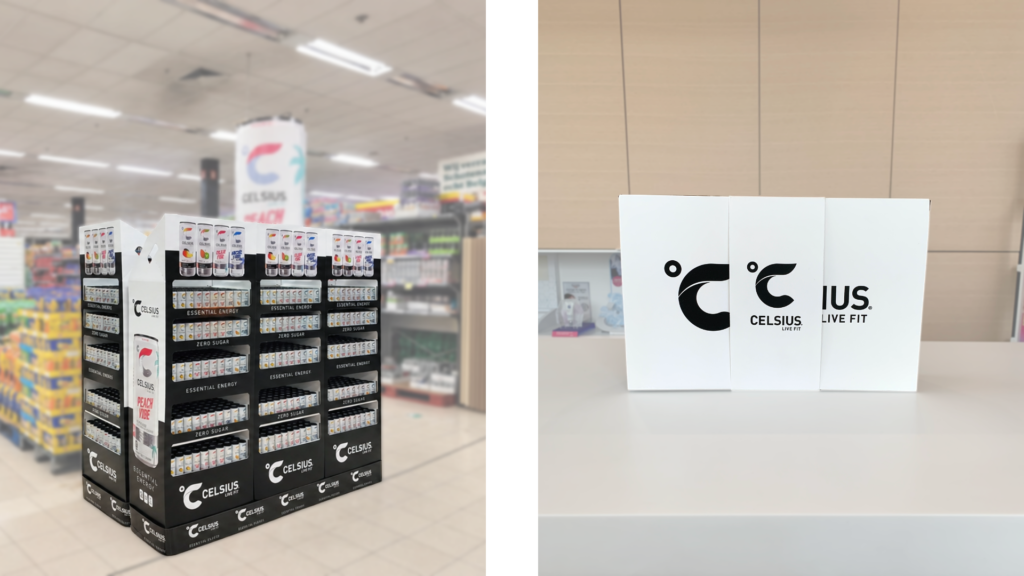
Avène, Caudalie, Celsius and Pepsi have already entrusted us with their displays. Our commitment to corporate social responsibility is also recognised: POP Solutions has held the EcoVadis Gold medal since 2022, placing us among the top 5% of certified companies in our sector.
Frequently asked questions
Are POS displays enough to ensure a successful product launch?
No. Brand awareness is built beforehand through advertising and brand campaigns. POS displays take over in store, making the new product visible at the point of purchase and converting the attention already generated into sales.
Which POS displays should you choose for a product launch?
Choose the display according to your objective: a floor display to introduce the new product in the aisle, a counter display to encourage impulse purchases, or shelf dressing to highlight the launch on existing shelving. The choice of material depends on the quantity of products on display and the duration of the campaign.
When should you start designing your POS displays?
As soon as the launch schedule is confirmed. Allow at least four weeks between the initial brief and delivery of a cardboard display, and longer for permanent retail furniture. Lead times depend on the material and production site.
Give your next product launch the visibility it deserves
Preparing to launch a new product and looking for the right display to reinforce your campaign in store? Our teams design and manufacture displays to fit your launch schedule, whether for a single store or an entire retail network. Contact our POS display experts to discuss your launch and find the most suitable format.